"In the middle of the journey of our life I found myself within a dark woods where the straight way was lost." ― Dante Alighieri, Inferno
Background
In the middle of the age of social media I found myself within a notification hell where the attention was lost. We have to be everywhere all at once: available, online, maintaining online presence. I'd be glad if the problems ended there but no, notifications keep popping up in increasing numbers. One's supposed to react to these little, seemingly harmless, interruptions. But for real, nobody's got time nor mental capacity for that.
We all have better devices and overall access to tech than, let's say, a decade ago. Back then you might have had a Nokia 3310 in the front pocket of your jeans. Do you remember what the notifications were like in the past? You only got notified when someone called or texted you. We couldn't have known that it's the dream. But then came the smartphones.
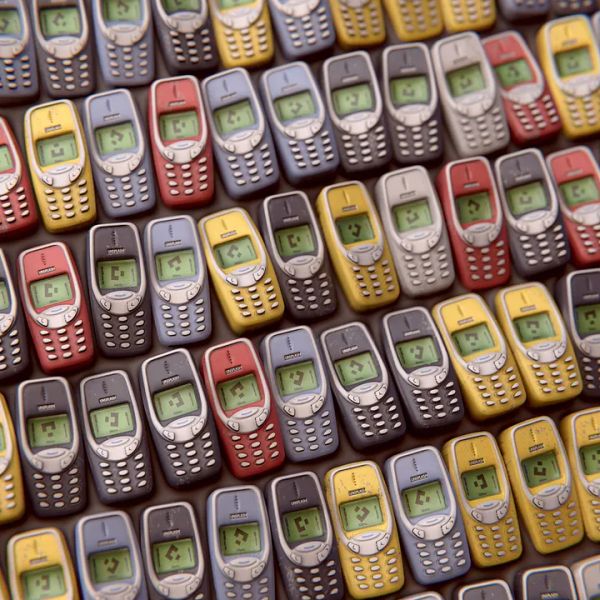
Smartphones came, apps were installed in growing numbers but our little brain couldn't keep up with the ever increasing requirement for attention. Alas, this equation resulted in multi-tasking which has been proven bad for us many times over (Why Multitasking Is A Bad Idea, 2022). Some of us even carry around several smart devices willingly. It should be obvious to you by now that it only adds to the problem. However, we love tech, we love apps, we love interactive notifications. All this inherently springs for the tendency to avoid boredom but boredom, in moderation, is considered to be healthy (Danckert et al., 2018). There's no turning back from the smart device era though but it doesn't mean we cannot solve the issues it causes.
Speaking of notifications today, there's a trend to increase the diversity of types and sources of notifications (Burke et al., 2006). One might argue you can choose which notification you allow but not everyone has the time, or know-how to the extent, to select whether to get notifications from daily lessons on Duolingo or not. Do you? In addition, notifications know no politeness and keep on popping up in inappropriate moments. Moreover, notifications usually interrupt whatever you might be doing, either working or relaxing. Interruption is interruption. Actually, that's what led me to think deeply about this topic and into the rabbit hole I went.

The Personal Connection
Am I interrupting this story with this paragraph describing my personal connection to the topic? Feel free to skip over to the next chapter. I hate notifications. I've silenced all the notification sounds besides incoming calls. I find the haptic alert much less interruptive, especially when around other people. In addition, I'm always changing the notification settings immediately when installing a new app. It doesn't feel user-friendly but I think the benefits outweigh the effort in the long run. I could say my life is peaceful notification-wise but, despite all my effort, there are notifications I cannot affect: the other's notifications. Whenever I'm hanging out with someone who's device beeps every now and then, I notice that my attention is drawn to the audio alert. This is like second-hand smoking and I'm growing more and more tired of it. I want to raise awareness and thus decided to write about this.
Interruption Overload
What's the science behind all this, you might ask? Interruption overload, a state in which all attention is lost due to constant interruptions, doubtlessly causes reduction in productivity (Bailey et al., 2006) and can possibly increase frustration (Okoshi et al., 2016). All the careful readers can deduce that the combination of multitasking and interruption overload can really have a negative effect on your mental health. In application development, this might be difficult to take into account as you're, typically, focusing only on the app under development, not all the other apps on the user's device fighting for the limited attention. Haven't we yet learned that when resources are scarce, minimising their usage is the only path to sustainability?
Timing Notifications Better
The research for the interruption overload points to two directions: scheduling notifications, and mitigation of notifications. Okoshi et al. (2016) sought to investigate this problem using the first approach. The team developed and tested a system called Attelia which detects appropriate timings for delivering notifications to users without any psycho-physiological sensors or modifications into applications. Attelia used breakpoint-timing notifications resulting in 28% reduction in frustration compared to notifications at random timings. I was disappointed to learn that Attelia is not yet available due to the technical difficulties of developing such a middleware app for smartphones of any flavour. Despite all the good Attelia proved to achieve, I think it's safe to say it's only one of the two puzzle pieces we need.
The Decluttering Method for Apps
The other approach being mitigation of notifications. But how do we achieve that? No, but really? There's been a trend among tech companies to make everything into an app. Hear me out: it's rarely justified. I believe everything's made into an app just to have that icon on our screens and sending occasional notifications to remind us of the existence of the said app. Did we ask for it though? Most apps, in my opinion, would work just fine as mobile-friendly web pages or progressive web applications, PWAs, and I am honestly clueless why companies do not acknowledge the existence of these two possibilities. Big tech doesn't try to mitigate the notifications so we have to do it by ourselves.
You probably didn't know that there are lots of PWAs out there, for example Instagram and Twitter. I haven't seen any companies advertising these, which confirms the hypothesis that the tech companies want us to install the app for dubious reasons. Is it easier to collect user data, or even spy on the users, with proper apps? Let's, however, save the conspiracies to another day. By installing the PWA version of any of your favourite apps you'll get way less notifications and save space from the device as an extra perk. Usually, you won't notice the difference in any other ways. This is a way to lessen the risk of interruption overload but I wouldn't say it's the missing puzzle piece by itself.
Let me propose the usage of a decluttering method that lends from the KonMari method (Chamberlin, 2021) since using apps can be seen as a form of consumption. Start by changing your global notification settings. You might need to have notification sounds or go full silent like how I prefer. It's up to you. The comes the more difficult and important part — evaluating the purpose of your apps. Proceed by going through all of your apps one by one and ask the following questions:
Do you really need this app or not? Does this app need to be on this device? Could you live without the notifications from this app?
If you're wondering what to do next delete, all the apps that got answered negatively either in the first or second question. If all three of the answers were positive it's time to disable the notifications or install the PWA alternative of the app under observation. Keep in mind that lots of the companies deliver the same service as an app, PWA and mobile-friendly website. Continue this process until you've gone through all the apps.
Consider switching your launcher to one that can be tweaked for minimalism, such as Ruthless or Olauncher, if you're still craving for reduction in interruptions. Put your smartphone into monochromatic mode for extreme minimalism and reduction in interruptions. If that fails to bring enough satisfaction and harmony to your life you should seriously consider reverting back to using Nokia 3310.
Summary of Sorts
Apps are constantly fighting for our attention but we can solve that. Maybe the current solutions proposed above aren't the best ones but they're the ones available right now. Technology companies should be held accountable for all this and invest in ethical design a bit more. Actually, a lot more. Meanwhile you can do so much to reduce the feeling of getting overwhelmed by the constant bombard of notifications. I've made an empirical observation that the addictiveness of smartphones reduces greatly if you follow the KonMari method for apps. You should at least give it a try and now it's better than ever to do so.
Write down your initial frustrations and other thoughts about notifications and all that jazz. Follow the KonMari-esque method for apps and try living that way for, let's say, 10 days. Report your feelings after this period and compare to what you had to say initially. I guarantee you have no turning back.
"From there we came outside and saw the stars." ― Dante Alighieri, Inferno
References
Why Multitasking Is a Bad Idea | CFI Tampa Bay. (2022, July 2). https://cfitampabay.org/blogs/why-multitasking-is-a-bad-idea/
Danckert, J., Mugon, J., Struk, A. A., & Eastwood, J. (2018). Boredom: What Is It Good For? Springer International Publishing EBooks, 93–119. https://doi.org/10.1007/978-3-319-77619-4_6
Burke, J., Estrin, D., & Hansen, M. (2006). a Parker, N Ramanathan, S Reddy and MB Srivastava.“Participatory Sensing”. In World Sensor Web Workshop, ACM Sensys.
Bailey, B. P., & Konstan, J. A. (2006). On the need for attention-aware systems: Measuring effects of interruption on task performance, error rate, and affective state. Computers in Human Behavior, 22(4), 685–708. https://doi.org/10.1016/j.chb.2005.12.009
Okoshi, T., Nozaki, H., Nakazawa, J., Tokuda, H., Ramos, J., & Dey, A. K. (2016). Towards attention-aware adaptive notification on smart phones. Pervasive and Mobile Computing, 26, 17–34. https://doi.org/10.1016/j.pmcj.2015.10.004
Chamberlin, L. (2021). Spark joy and slow acquisition: the KonMari method and its impact on moments of consumption. https://depositonce.tu-berlin.de/items/d43a1179-5031-449d-8700-a5088ee01e7d