In this essay-ish text, I describe my journey with accessibility from 0 to 100. This is not a scientific research but a mere manifestation of my broadened awareness. I'll go through the initial state of my knowledge, and through various meandering paths and side paths, I'm supposed to reach the golden land. Or so they say. At the time of writing this sentence, I have no planned structure for this story nor an idea where I'll end up. There's only a short list of words I want to embed within these lines of text. I guess this retrospective review will refresh my mind on certain topics, help me broaden my designer senses even more, and make me more conscious of accessibility as it's supposed to be present all around me. On we go!
Recently, I partook in the course Fundamentals of Accessibility. I hadn't really thought about accessibility before besides what little I could notice without any prior knowledge. It quickly became apparent to me that my idea of what accessibility means covers only the visible surface. In fact, accessibility is a deep ocean where no bottom can be reached, no matter how deep you want to dive. I've noted that the lack of accessibility is visible or even limiting but the presence of it is usually invisible which makes it more difficult to observe without consciousness of it.

We all use features that are labelled under accessibility in our everyday life: automatic doors, navigators, translators and so on. These assistive technologies seem like an obvious development of modern technology but, in fact, it's not so self-evident. You see, tech companies would profit more if they didn't have to tinker with usability in mind. That's where you're as wrong as you can get. Whereas the census says that accessibility features are for disabled, they're for everybody to use either regularly, occasionally, situationally or always. Thus it doesn't require a genius to see that more profit lies in accessible solutions. To conclude, life without accessibility features would be painstakingly overloading.
Disabilities — You have one
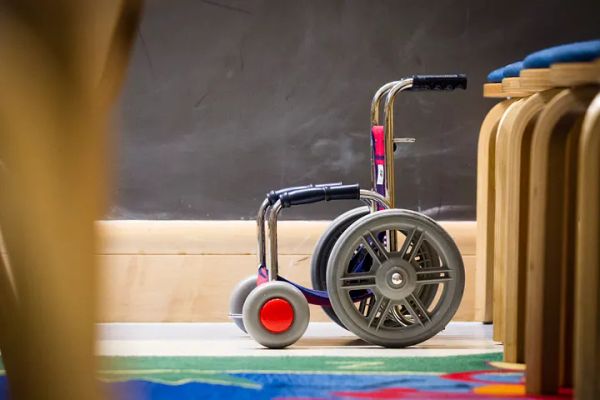
Talking about disabled people usually conjures up an image of a person sitting in a wheelchair. That image is right but covers only a tiny sliver of disabilities. Physical disabilities is the obvious camp but there are also mental disabilities that aren't too flashy. Both of the said categories might limit the person's movements, senses, or activities. Cognitive impairment is when a person has trouble remembering, learning new things, concentrating, or making decisions that affect their everyday life. You should also keep in mind that disabilities aren't always permanent. They can also be momentary or situational. For example, if you get a LASIK you're basically blind for a short time before getting your eyesight back better as before. Also, when you're driving a car you're not supposed to take your eyes off the road so any actions you perform on a mobile device should rely on alternative modalities. Usually this refers to the usage of voice input methods. Now that this is out of the way, you should understand that persons with any of the aforementioned conditions are regarded generally as disabled. I feel like I have to describe this topic a bit more as almost all of us have some disabling traits — more on this topic in the following few paragraphs.
Cognitive impairment refers to having a hard time remembering or understanding, learning or making decisions: having an intellectual disability. The label hides lots of mental conditions, like ADHD, underneath it but it can, as well, be situational. For example, being too tired renders you unable to remember things as easily, making decisions can be more difficult based on your mood and so on. If you recognise yourself in any of the descriptions, cognitive accessibility is your saviour. It means making content and whatnot easier to understand trying to reach all types of users with different disabilities. One of the usual methods is to take advantage of easy language but I'll get back to it a bit later when it's more relevant. I've personally noted that it's extremely tough to stay focused from time to time. As far as I know, I have no cognitive impairments but in these occasional moments I feel like accessibility features would ease the burden. So, cognitive impairments, temporal or permanent, need to be taken into consideration when designing literally anything.
Linguistic impairments cover a wide range of situational and temporary disabilities. You can have a cognitive disability restricting your linguistic skills or live in a country whose national language is totally Greek to you. In both situations your skills restrict your actions. This can apply both to spoken or written languages separately. Applications such as Google Live Transcribe might help you if you live abroad. It's a textbook example of intermodal translation which is a topic I'll visit subsequently. Having temporal linguistic difficulties, however, cannot be solved with a piece of tech like that. While intermodal translation might be one solution, the aforementioned easy language might ease people suffering from said disabilities. In Finland, the public broadcasting company YLE provides selected pieces of news in easy language just for reference. This is a working example both for people with temporal and situational linguistic difficulties. If I was learning Finnish, I'd really appreciate this service.
Sensory impairment means having difficulties processing any of the five senses — blind and deaf are the most typical people in this category. Temporally having no sense of touch is an extremely rare case but situational lessened sense of touch is very much a thing. Having no sense of taste or smell rarely makes a difference whilst using modern technology though one could argue a fire alarm is a piece of assistive technology for people with low or no sense of smell. Now that I mentioned it, it's a straight intermodal translation. Sight being the primary sense of humans, inherently visual technology is difficult to make available for blind. But there's a relief — the definition of blind covers much more than just the completely blind. Thus any assistance in making the main content more visible helps here. For deaf and hard-of-hearing, there exists technologies such as hearing aids and closed captions. Of which the latter might be beneficial for all of us in this streaming era we live in — I prefer to use captions whenever and wherever possible to share the work for two senses, especially when watching any content that's not in Finnish. For example, more and more movies are streamed on mobile devices and without headphones the audio quality is nonexistent. This is where closed captioning can help a person without sensory impairments to notice the quieter sounds as well. Our eyes pick up signals a way quicker than our ears so this field can be proven to be a gold mine if researched and implemented properly.
Observations and experiments
The studying of the fundamentals of accessibility has left me mark: I cannot view the world like I used to do. I cannot help realising that I've been dealing with this matter quite a lot in the last couple of years: writing documents, autocorrect in messaging apps, magnifier on my laptop, etc. Oh my, I cannot state how deeply I've fallen in love with magnifier especially when reading something on the small screen of a laptop. I do not need it but it makes things easier and might even keep me focused a bit better. It sure is an accessibility feature. Another accessibility feature I rely a lot on is automated spelling checks and autocorrection. Those features are in daily use and I cannot think how big of a burden writing a simple message would be as I couldn't leave it double checked. As a matter of fact, writing this essay, I have all the features toggled on and I have a translator open in another window as my native language is not English. Although, the functionality I use the translator the most for is finding synonyms — not a function of a traditional translator but rather an accessibility feature.
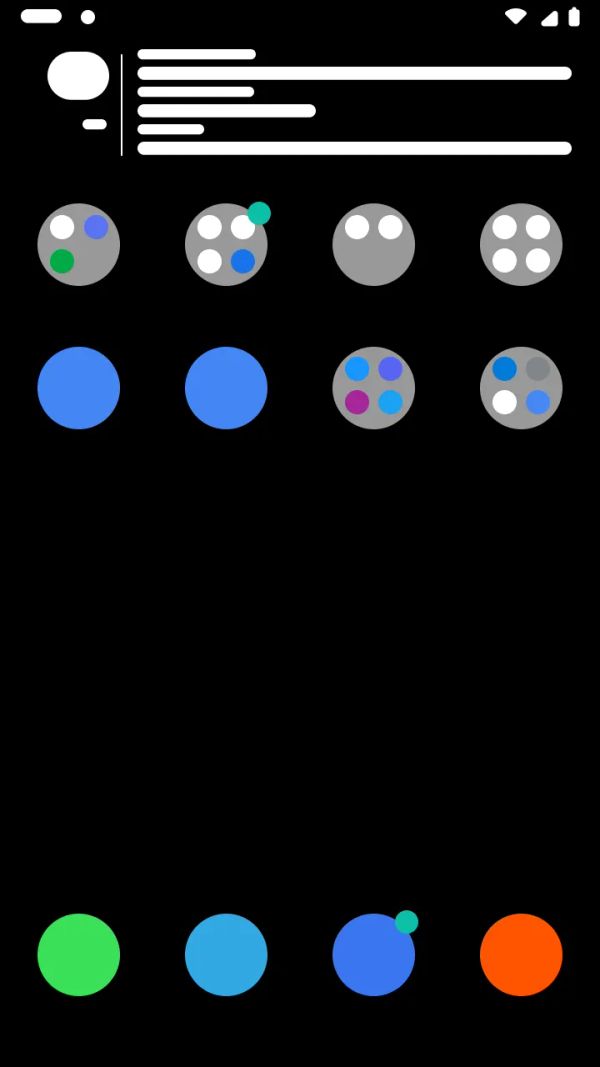
Is there such a thing as too much accessibility? I would dare to argue that there can be. You might identify with this pretty easily but I've been struggling to quit mindless browsing on my mobile phone. The hypothesis I have come up with is that when things, mobile apps in this case, are too accessible it's easy to use them unconsciously. Accessibility not being the only culprit here, social media and infinite feeds are the real evil. However, by trial and error, I've noticed empirically that installing a custom launcher to remove all the labels of the apps renders the unconscious process of opening apps disabled. To further reduce the accessibility, I've put every app on a single screen in folders, again without labels, and disabled the app drawer. This way opening most of the apps requires a couple of taps and lots of consciousness. This experiment of reduced accessibility, although sometimes being annoying, has worked for me. Maybe it would work for you as well. I'd love to do research based on this hypothesis! Anyway, what I have come to believe is that consciousness of accessibility features and their pros and cons should be emphasised in design — consciousness in general is a virtue.
These features and observations I've mentioned should touch every single one of us on some level. Thus accessibility is not something that should be thought to benefit only the distinctively disabled — it's valuable for everyone. Features that grant you access, or enable you, to do something — hence accessibility — are a lifeline for modern society and technological gadgets. People are unique individuals with their individual needs and that's where accessibility proves invaluable. The term could be thought of as an enabler of different ways of doing something: it's truly appreciating differences. Accessibility is everywhere around us.