Background
Usually, metaverse refers to shared virtual world environments which people can access via the internet. Metaverse aims to make content more immersive and interactions more lifelike; the interactions supported would be multi-dimensional, and the users could experience the content instead of just viewing it. Covid-19 pandemic has accelerated the interest towards metaverses. Having been just stuff from science fiction, metaverses are already under development. The company formerly known as Facebook notoriously changed its name into Meta due to the fact it is widely embracing this technology. Metaverses are thought to be the next era of the internet.

According to the current understanding of the applications, metaverses are supposed to replace the old ways of interaction. Currently, people are interacting through social media platforms or messaging apps. In metaverses, people could pay virtual visits to other people's places without actually leaving home. Since metaverses are trying to replace all human-human online interactions, they are meant for all of us. There are both VR and AR applications so as long as you have a smartphone in your pocket you can access these digital worlds.
Systems thinking
Analysis of technological elements
Since we are talking about tech that the company Meta is after, needlessly to say, it's all about data. You can collect only so much data from traditional social media platforms. When it comes to metaverses, you could easily harvest data about human movements, preferred gestures, body postures, gaze paths. The list goes on and on. Metaverses would need to use lots of real-time user data. Even more if it would allow user-user interactions, like handshaking and hugging. Fortunately, the aforementioned company has been brought up in a negative light regarding data collection before. Hopefully, we have learned from before and are more conscious about what the user agreements say. Collecting the data is not the problem, how it is used is! Personalised metaverse environments can easily be more personal than the current social media pages. Thus we need to be extra cautious what to share and who can see our data.
Hardware-wise, the simplest metaverse would be a shared digital environment on a 2D screen without any real life dimensions. However, there is nothing new in that. It's more likely that the first metaverses with real usage would have some AR components to them. Speaking of augmented realities, a modern smartphone is enough hardware to immerse in this kind of metaverse. Although, headphones could be highly recommended for immersive soundscape. The next logical step is utilising a virtual reality approach. That would require VR goggles of some sort. Since they aren't that common nowadays, we are likely to see AR metaverses first and after we get hooked we crave for more immersion. The further we go the computing power needed increases exponentially. We could see an increasing demand in developing more powerful computers arising from the need of more immersive metaverses. Jumping into the deep end of the pool, a fully fledged sci-fi metaverse would require more than just wearable tech. In the far future we would jump into metaverse pods that would put us into some kind of state that resembles sleeping and we'd shift to the digital reality worlds. To conclude this section about hardware, the more hardware the more immersion we get. Our current tech can be used for the first step of metaverses but who knows what's the next step.
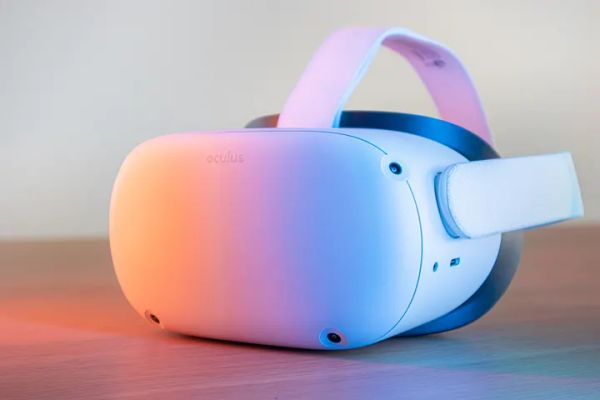
The software is already there. We have games utilising virtual reality. Then we need personalised VR spaces with interactable stuff in them. What limits us is computing power. The current virtual realities we have doesn't look too convincing and they are said to cause nausea and other non-wanted symptoms. As said before, AR metaverses are most likely coming before VR ones. There are games that are quite close to being AR metaverses, for example Pokemon Go. The graphics and the connectedness to the real world aren't up to the point of being immersive but a project that would aim to solve these could do it with the software we have at hand. Advances in 3D graphic optimization would help us to get the metaverses more available to our current devices. All in all, it's not a question about software anymore.
Synthesis
Needless to say, metaverses would require reliable and powerful servers around the world. Today's social media platforms have lots of issues with social and cultural rules, what's appropriate and what should be censored. Metaverses being a way more immersive social media spaces, there would have to be different servers with different rules based on different cultures available to ensure the high level of immersion. People like to personalise their social media pages already but how much more would the users like to customise their own virtual 3D room. Being a three-dimensional multi-dimensional interactions enabling environment, cultural ways would be more visible. Imagine if you could, instead of viewing a video about a live music performance, experience it in a digital environment with your friends in real time. All without leaving your couch. The digital versions of cultural events could be accessible from all over the world. Would it help cultures to collide or would it counterintuitively separate us even more? We could never foresee the social influences of social media. This is the same times one thousand.
Social premises
Metaverses are based on the human need of interacting with each other, that's true for social media as well. However, we are not good at behaving on the internet and I'm afraid metaverses aren't here to fix that. As long as there have been computers, there's been hackers. Metaverses are just new vulnerable platforms for their malicious work. If we owned our own little virtual corners of the metaverse it would mean that a metaverse burglary would be a new type of crime waiting to happen. Let's throw that pessimism aside for a while. If we lived in a world without hackers we'd still face lots of societal and cultural issues in metaverses. We would need to regulate available interactions based on cultural norms and common ethics. Maybe each different world would need its own set of rules. Censoring hate speech is already pretty difficult but it would get even worse. How can you tell which gestures or other new types of interaction can be interpreted as offensive? Who has access to the metaverse? How do you distribute the virtual 3D space? Which laws should apply in the metaverse? There's a lot of unanswered social questions that need to be answered before we can see metaverses becoming mainstream.

Risk analysis
Where should I begin? Metaverses will be the golden era for internet trolls and other people with harmful intentions. I think it would be easier to just make a list so here it goes: cultural clashes, unclear rules, metaverse burglary, hacking, loss of personal data, people pretending to be someone else, difficulties separating metaverse from the real world, addiction, and so on. There's also environmental issues such as increased use of electricity, increased demand for rare materials and people caring more about the virtual world than the planet they live in.
Privacy is a real risk here. We are already losing some of our personal data to hackers. Metaverses would be an even more appealing target for them. Somewhat related to privacy issues, common rules need to be agreed by everyone. People need to be monitored continuously that they are following the set of rules. In order to feel safe, people need to trust the body that sets and manages the rules.

Cultural habits would most definitely change as they did with social media. There's no question about that. Immersive visuals will play a major role in affecting cultural behaviour. Also, different cultures are where some of the common rules should come. Clashing of cultures, as mentioned before, will be an unavoidable issue.
The more immersive the experience the more addictive it will become. Some people struggle with their addictions to social media and other infinitely scrollable sites. What would that problem look like in metaverses? It's good that immersion increases with more wearable tech so it's not always available. Though, highly addicted people wouldn't get out of home so they could spend as much time in the digital world as possible. Addictions like this already exist especially among people who are playing RPGs. Human-human interactions combined with immersive non-real worlds seems to be a good recipe for serious addiction.
Metaverses could increase the amount of interactions people have with each other but at the same time the real life interactions could be replaced by the artificial interactions. At first in social media, people loved to interact with people they hadn't been interacting with for years. Fast Forward a couple of years, people grew to understand the difference between having hundreds of friends and having a handful or good friends. Maybe we can assume metaverses to follow this trend as well.
There are lots of risks regarding metaverses. So much so that I had to leave some of them out. Unless we see what the companies working on metaverses are up to, we can only let our imaginations run wild in these dystopic views. To summarise, there's more stuff that can go wrong than that can go right but with a proper implementation metaverse will be the next cornerstone of technology. Where there's great risks lies great opportunities.

This article was originally written for the course Sustainable Development at Tampere University.