Good and bad initial ideas
Last week, I analysed metaverse and innovated some alternative solutions both for the social actions and 3D virtual environments. I've kept my distance from the ideas by keeping the creativity slot of my brain busy with my hobbies. This week is all about reviewing and refining the existing ideas accompanied by sustainability analysis of the said innovations.
Based on how appealing they sound to me now that I have spent a week doing other stuff, I put the ideas from the last week in order. In my judgement, I kept in mind which of the ideas would be on the edge when released if we started developing them today. This is the reason I ranked physical gesture inputs in the last place. I mean, we already have those features in use in selfie cameras and in some of the social media camera filters. It wasn't difficult to decide which of the ideas would come second either. Needless to say, the very futuristic interverse is something out of a sci-fi movie rather than real life. It's too far-fetched yet very intriguing. However, metaversifying the whole internet is not something you could do in a decade or so. It leaves the first place to AR guests! Augmented realities are already here but they are not too much explored. The part of projecting something into a real environment already functions properly but scanning human movements is not feasible enough yet. I could see this coming into life within a decade and the idea feels extremely potential, both socially and businesswise.

Using the SCAMPER method
The SCAMPER method is used to explore ideas that don't feel too fruitful a bit further. In their article Dam and Siang (2021) describe the method and its steps accompanied by guiding questions. Following the method, it's not necessary to go through all of the steps. Rather the SCAMPER method helps designers to ponder on initially bad ideas a bit longer. The said acronym comes from the words substitute, combine, adapt, modify, put to another use, eliminate and rearrange and they offer different perspectives on how to improve your ideas. Here, I'm using this method for the two worst ideas mentioned in the previous chapter.
Physical gesture inputs goes non-physical
Physical gesture inputs (PGI) sounded initially a pretty clumsy idea. However, through the aforementioned SCAMPER method I managed to find lots of improvement ideas. Here they are presented in the order of feasibility. Apologies in advance if the ideas feel a bit over-the-top.
PGI could be combined with speech recognition. Imagine if you could type words along with emojis through speech. Wouldn't that be something? Well, they don't necessarily need to be emojis but you get the point. All kinds of personalisation based on the prosodic elements of your speech could be used this way. Alternatively, facial expressions and hand gestures, possibly combined with tracking the gaze path, could be utilised to type silently whereas speech input always requires an audible audio. One could type either using one hand or no hands at all while just gazing at their phone and doing expressions for various purposes. We have all the required tech for this so where's the funding?
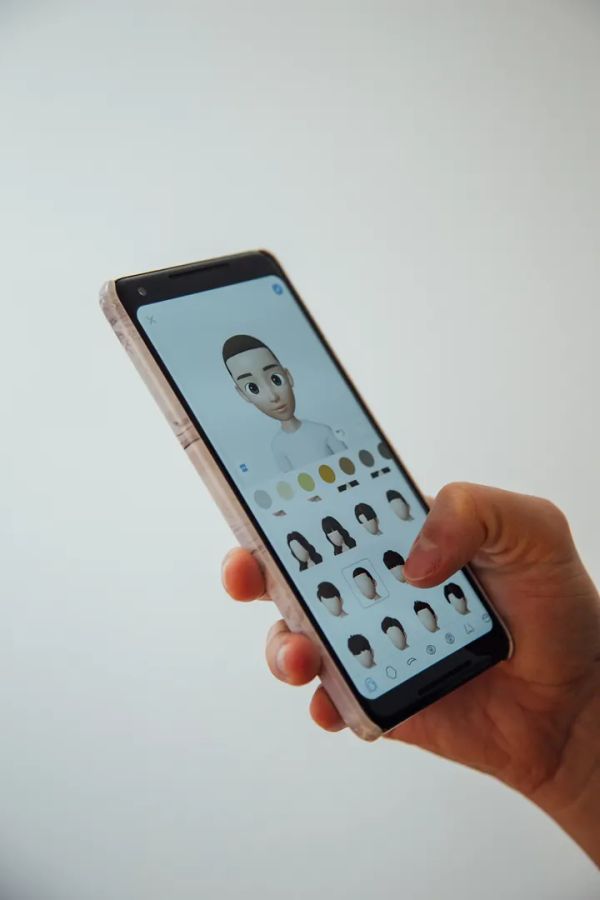
Automatic emojis could be inserted based on real-time facial expressions. This would, unfortunately, require the utilisation of cameras, preferably infrared cameras, all the time. In turn, it would consume lots of electricity and probably would raise some privacy concerns. Speaking of which, it could be implemented in the touchscreen keyboard which doesn't have any need for connecting to the internet. This way the users could feel more safe. However, I'm knowledgeable enough to say whether this kind of AI-based facial expression recognition can be done locally. This could actually make the online conversations feel more natural since you'd have to be making expressions while “talking”.
Okay let's dive into the deep end! If we had microchip implants that could read the gestures without using a camera those gestures could be used for all kinds of controlling purposes. One might enjoy having media controls always in their hand, quite literally. If a PGI with microchip implants was a thing, would we need smart phones as we know them today? Let me elaborate. If the input modality was totally different there would be no need for large touchscreens. The screen could be anywhere. You'd carry a nano-sized computer with you and project the thing onto any screen, like a Chromecast. You might want to carry a pocket-sized screen with you but you would also have the option to utilise any screen you like. Controls being non-physical opens up so many doors.
The sci-fi counterpart of metaverse
Interverse was originally a sci-fi idea. But they are required as lots of technologies are inspired by science fiction; one has to be able to imagine the tech of the future before it can be designed. Once again, I try to present the ideas in the order of feasibility though it's only based on my idea of what is easier to execute. Be warned, the feasibility estimation might be off by a couple of decades!
If we were to eliminate the requirement of being immersive the frontier of immediate possibilities grows in multitudes. Browsing the internet in a gamified 2D world, a low-level interverse, wouldn't feel too much of a step forward but it would be feasible! Kind of. It should bring enough additional value so that the companies would make their sites interverse-compatible. I can't see this happening other than being a great “infinite” sandbox game.
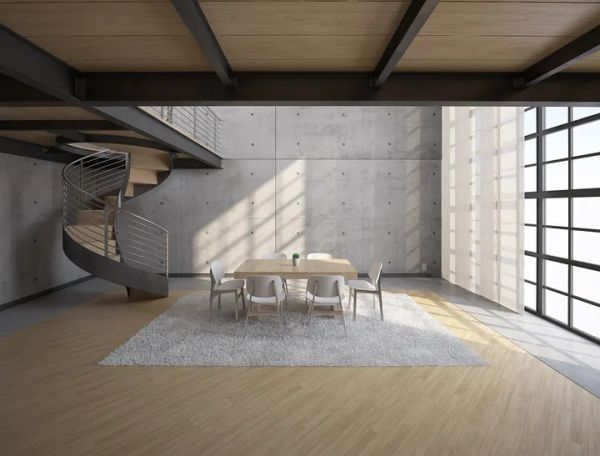
Architectural exhibitions, art displays and housing exhibitions would work so perfectly in the interverse. Actually, anything where the user has to be in the place to get the right feelings. Additionally, it could be used for doing architectural work, planning interior design or making digital sculpting. My estimate is that some of these ideas are already in use or under development. There are already virtual reality enhanced art exhibitions. But to make it fully fledged and immersive will most probably take a couple of years. Even with high-end gaming computers the computing power would come short if the virtual environments would be immersively detailed.
The interverse could be combined with the idea of metaverse quite effortlessly. It's a no-brainer to add the other users to the same site as virtual characters. This way there could be user-user interactions without any separated messaging services, forums or chat rooms. Interacting with people would be built into the very essence of the interverse. I cannot even begin to fathom what this would mean in terms of ethics or social sustainability, not to mention the issues caused by this. Fortunately, I cannot see this happening any time soon. Let's not solve the problems of the designers of the 22nd century.
Okay let me get this straight, microchip PGIs combined with metaversified internet sounds like a movie script waiting to happen. Actually, I can picture in my mind how this is a required step towards a dystopian cyberpunk future. I see no boundaries to this idea since it's like a gateway to fully digital 3D worlds that are way beyond what metaverses are going to be. The internet being a 3D world there's no boundaries on what we can build, and controls being kind of non-physical would blur the line between the real world and the interverse so much. Hopefully, we still have decades to ponder on the ethical issues of this kind of an application.
Reflection
I initially was going to say that the SCAMPER method works better with a group of designers but, after all, I have to admit being wrong. I just needed some time to get the creative juices flowing. My creativity level peaked for a while due to a combination of tea, focusing and the pressure of the oncoming deadlines. There are many reasons why I personally liked this method. One being that there's no pressure you have to take all of the different perspectives into account; you can pick the ones that spark inspiration. Additionally, I noticed the different perspectives feed each other resulting in more and more developed ideas. I grew to like even the ideas I found unattractive at first. To summarise, this is a method I'll definitely keep in my tool box.

Sustainability of AR guests
Why did I choose this initial idea to be the best? To be honest, it was almost entirely based on intuition. In this chapter I'll be analysing if it is good at all. I'll conduct a sustainability analysis divided into three sections: ecological sustainability, social sustainability and economic sustainability. I do hope my intuition is, if not right, leading me in the right direction.
Ecological aspects
First of all, I have already mentioned in my previous essay that with AR guests people don't have to actually travel to pay a visit to their friend or relative. Needless to say, that saves fuel, electricity or biological energy depending on your mode of transportation. Hardware-wise, the tech already exists in our pockets disregarding the movement scanning software. Due to the idea's software nature, not much physical resources are needed and the idea would probably result in less reduced fuel usage. In addition, there wouldn't be an increase in the issues caused by mining rare resources.
The expected life-span of the software needed could be pretty long regarding nowaday's standards. Since it's not about the UI people would feel attracted to it as long as paying visits would be as easy as making a video call. One could even argue it would be even easier! The long life-span is good sustainability-wise but there lies one major issue. Data transfers. It's a topic of its own that would need lots of research as video calls are already eating big chunks of bandwidth. What gives some hope is that to make 3D visualisations happen, the movement data is the only unknown. The 3D model and the textures of your guests can be downloaded and thus need not to be refreshed every second or so. The amount of movement data might actually be less than how much data is transferred in video calls.
Environmentally, this innovation is pretty sound. Not much resources, besides the tedious development, is needed. The data transfer might not be an issue though it needs to be looked into. Sounds very promising, right!
Social aspects
The whole point is to make visiting others easier, to make natural interaction happen more easily. It's beneficial as meeting people wouldn't require as much planning as it does now. Additionally, it gives some safety as it would enable visiting anyone from anywhere; the visit itself might be dangerous, there could be a car crash on the way there and so on. Safety is a key element in social sustainability.
There's a risk that people won't go out anymore since it feels too much of a burden. Even today some people consider it easier to order food home than shopping for some groceries. The issues this kind of effect would create if people couldn't find the energy to meet other people in real life are unpredictable! Dehumanisation is something that cannot be neglected.
To give some positive insights, the fear of missing out could be expected to dive as meeting people would be very effortless. Nonetheless, this technology should be accessible by all different people as it's most needed by those who often get excluded, the elder people. It should be affordable and easy to use also for safety reasons. What if someone accidentally meets the wrong person? Or, even worse, an unknown person? The system should not allow that kind of errors or memory slips to happen thus a minimalistic UI should be a requirement.
Though the idea was appealing ecologically, there are some social studies that need to be done before actually proceeding to the development phase. Still, AR guests holds value to me as I see all the possibilities it could bring.
Economic aspects
This idea would revolutionise the means of online communication. Whereas people have gotten used to video calls during the pandemic, this is the next big step in that frontier. This means big potential as it would quickly become the preferred way of communication. I don't think text-based platforms would take too much of a hit though. That being said, there should be rather large funding behind the project if it was launched. A plan for server overflows should be made well in advance.
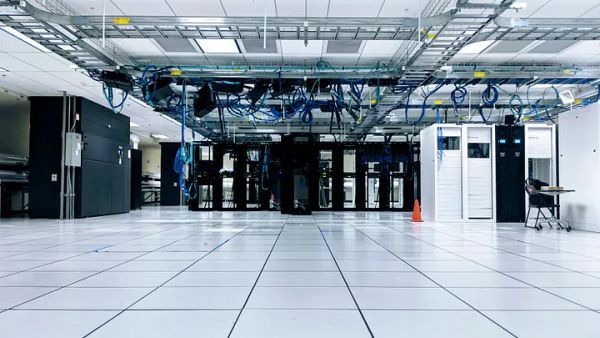
AR guests could easily lead to a monopoly if only one company has this kind of a product. However, if it's a new company that pioneers this kind of an interaction medium they have more trust from the public if they start off with good intentions. It could be even profitable to make this as an open source project so that the big greedy companies couldn't compete that well. Being an open source project, AR guests could be a community-driven solution that gives the internet back to the people.
In conclusion, the product should not be let into the hands of one big company. The more potential there is, the more economically appealing the solution is to the big companies. Although AR guests would require enormous server capacity straight from the start, it is a chance to redistribute the power structure of the internet.
This article was originally written for the course Sustainable Development at Tampere University.